
Keep PDFSTOOLZ Free
If we saved you time today and found PDFSTOOLZ useful, please consider a small support.
It keeps the servers running fast for everyone.

🔒 100% Secure & Private.
Enhance your productivity today with our professional guide to to word pdf, tailored specifically for your needs.


to word pdf: The Game-Changer for Actors on the Go
Actors juggle countless responsibilities. You attend auditions, rehearse scenes, and tirelessly memorize lines. Often, your scripts arrive as PDF files. While PDFs offer universal readability, they present a significant challenge for actors. They are notoriously difficult to edit, highlight, or annotate directly, especially on a tablet or phone. This limitation cripples your ability to mark up scripts efficiently during intense rehearsals or while commuting. Understanding how to to word pdf conversion works is not just a convenience; it is an absolute necessity for modern performers. Indeed, mastering this simple yet powerful conversion unlocks unparalleled flexibility for script management.
I have seen firsthand how much time actors waste struggling with uneditable PDFs. Moreover, this frustration often detracts from their creative process. You need tools that enhance your craft, not hinder it. Therefore, converting your script from PDF to an editable Word document becomes a critical skill. It transforms a static document into a dynamic workspace, perfectly tailored for your demanding schedule. Consequently, you gain the power to truly own your script, making it a living document that evolves with your performance.
Why Actors Must Master PDF to Word Conversion
Your script is your bible. It contains your lines, your cues, and the very essence of your character. However, receiving it as a PDF often feels like receiving a locked vault. You can read it, but you cannot truly interact with it. For actors, this is a major impediment. Imagine trying to highlight your lines in a PDF on a small phone screen during a packed subway ride. It is cumbersome, imprecise, and incredibly inefficient. Furthermore, directors often provide notes that require immediate integration into your personal script copy.
The inability to quickly mark up your script impedes preparation. Consequently, you might miss critical blocking notes or character adjustments. Moreover, waiting until you are home with a printer and highlighter is simply not feasible in today’s fast-paced production environment. You need immediate, actionable solutions. Therefore, the ability to convert to docx format is not merely a technical skill; it is a fundamental aspect of professional preparedness. It directly impacts your performance quality and your ability to collaborate effectively.
Consider the sheer volume of material you handle. Sides for an audition, full-length plays, television pilot scripts – they all arrive in various digital formats. Oftentimes, these are uneditable PDFs. My personal experience working with countless actors confirms this pattern. They consistently voice the same frustration: “I just need to highlight my lines!” Consequently, I firmly believe that every actor must have a reliable method for how to to word pdf conversion. It is a non-negotiable skill in this digital age.
The Core Process: How to Word PDF
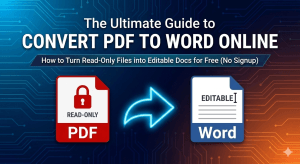
Converting a PDF to a Word document is a straightforward process, provided you use the correct tools. Essentially, you are translating one file format into another, aiming to retain as much of the original formatting as possible. This transformation allows you to open the document in Microsoft Word or any compatible word processor. Subsequently, you can highlight, delete, add notes, and modify the text as needed. The first step involves selecting a reliable conversion tool.
Once you choose your tool, the typical procedure is simple. First, you upload your PDF script. Next, you initiate the conversion process. Finally, you download the newly created Word document. The quality of the conversion heavily depends on the source PDF’s complexity and the sophistication of your chosen tool. For instance, a text-heavy script converts much more cleanly than one with numerous images, complex layouts, or scanned text. Always prioritize tools that offer excellent accuracy.
Many tools offer an option for OCR (Optical Character Recognition) when dealing with scanned PDFs. This feature is crucial if your script is an image-based PDF, perhaps a scanned copy of an older play. Without OCR, the conversion tool treats the text as pictures, not editable characters. Therefore, enabling OCR ensures that the resulting Word document contains actual, editable text. This functionality is invaluable for historical scripts or documents that were never originally digital.
After the conversion, immediately open the Word document. Inspect it thoroughly. Check for any formatting discrepancies, incorrect line breaks, or missing elements. Sometimes, minor adjustments are necessary. Nevertheless, these minor tweaks are far less time-consuming than manually retyping or struggling with an uneditable PDF. The goal is a fully functional document where you can freely make your acting choices.
My Personal Take on How to Word PDF Transforms Workflow
I recall working with Sarah, a brilliant stage actor preparing for a demanding role. She received her 150-page script as a single PDF. Her initial method involved printing the entire thing, using multiple highlighters, and then lugging it everywhere. This manual process was inefficient and physically cumbersome. She was spending hours marking lines when she could have been running them. Her bag, consequently, felt like it contained bricks.
I showed her a reliable method to to word pdf. Within minutes, her script was an editable .docx file. Her immediate reaction was profound relief. She started highlighting her lines digitally on her tablet, adding notes in different colors for character beats and blocking. Moreover, she could easily adjust font sizes for night rehearsals without straining her eyes. This digital flexibility revolutionized her preparation.
Sarah no longer feared last-minute script changes. She could quickly incorporate revisions sent by the director via email. Furthermore, she could even use the search function to find every instance of her character’s name or a specific prop. This level of interaction with her script was simply impossible with a static PDF. I witnessed her confidence and preparation elevate significantly because of this seemingly simple conversion. It made her process agile.
Choosing the Right Tool to Word PDF
Selecting the best tool for your PDF to Word conversions is critical. The market offers a vast array of options, each with its own set of advantages and disadvantages. Your choice depends on several factors: your budget, the frequency of your conversions, the complexity of your PDFs, and your preferred device. I categorize these tools into three main types: online converters, desktop software, and mobile applications. Each serves a distinct purpose.
Online Converters for Quick Script Edits
Online pdf to word converters are incredibly popular due to their accessibility and convenience. You simply visit a website, upload your PDF, and download the converted Word file. Most of these services are free for basic use, making them an excellent starting point for actors on a budget. Furthermore, they typically require no software installation, which is perfect for working on different computers or devices.
However, online tools come with caveats. Security is a primary concern. You are uploading potentially sensitive script material to a third-party server. Always check the privacy policy of any online converter before using it. I recommend opting for reputable services with strong encryption and data deletion policies. Moreover, some free versions impose file size limits or daily conversion caps.
Quality of conversion also varies wildly. Simple, text-only scripts generally convert well across most platforms. Conversely, complex layouts with embedded images, tables, or specific fonts might lose their formatting. For a quick one-off conversion of a simple audition side, an online converter is perfectly adequate. For a full-length play with intricate formatting, you might need something more robust.
Desktop Software for Robust PDF to Word Conversion
Desktop software offers the highest level of control and conversion quality. Applications like Adobe Acrobat Pro, Nitro Pro, or dedicated PDF converters provide comprehensive features. These programs typically deliver superior formatting retention and handle complex PDFs with greater accuracy. Moreover, they often include advanced functionalities beyond simple conversion. For example, you can use them to merge pdf files together, or to compress pdf documents.
The main drawback is the cost. Desktop software usually requires a one-time purchase or a subscription fee. Nevertheless, for professional actors who frequently work with large, complex scripts, this investment pays dividends in terms of time saved and frustration avoided. Furthermore, these applications perform conversions offline, enhancing security for proprietary scripts. You are not reliant on an internet connection.
Many desktop solutions offer batch conversion, a massive time-saver if you have multiple scenes or acts as separate PDF files. Consequently, you can convert an entire play in one go. They also provide more granular control over output settings, such as choosing specific pages to convert or handling images. Therefore, for serious, high-volume script work, desktop software is the definitive choice.
Mobile Apps for On-the-Go Script Editing
Mobile apps bridge the gap between convenience and functionality for actors constantly moving. These applications, available on iOS and Android, allow you to convert PDFs directly on your smartphone or tablet. This is incredibly advantageous for actors who spend significant time commuting, waiting backstage, or rehearsing in various locations. You can literally convert and edit pdf scripts anywhere.
Many mobile apps offer similar functionality to online converters but with better integration into your device’s file system. Some even integrate with cloud storage services like Dropbox or Google Drive. This facilitates seamless access to your scripts wherever they are stored. Furthermore, these apps often boast intuitive interfaces optimized for touchscreens, making highlighting and annotating much easier than with a web browser.
Be mindful of app permissions and in-app purchases. Free versions often come with ads, limited features, or a conversion cap. Moreover, the accuracy of conversion can sometimes be less robust than dedicated desktop software, especially for very complex documents. However, for everyday script markup and quick edits, a well-chosen mobile app is an indispensable tool for the modern actor. It embodies the essence of “on-the-go” workflow.
Pros and Cons of Converting to Word
Understanding the advantages and disadvantages of converting your PDF scripts to Word documents is crucial. It helps you decide when and how to employ this powerful strategy. Ultimately, the benefits overwhelmingly outweigh the drawbacks for actors. I have outlined the key points below.
Pros:
Unrestricted Editing: Once in Word, you gain full control. Highlight lines, add blocking notes, insert character motivations, or even rewrite a line for an improv exercise (if permitted). This level of interaction is simply impossible with a standard PDF.
Seamless Digital Highlighting: Say goodbye to physical highlighters. Digital highlighting is cleaner, infinitely customizable with colors, and undoable. You can highlight your lines, your scene partner’s lines, or director’s notes in distinct colors.
Personalized Annotations: Add extensive notes directly into the document. Use comments, text boxes, or even track changes to refine your performance. This creates a deeply personalized script, far more valuable than a static document.
Font and Readability Adjustments: Easily change font sizes, styles, and colors to suit your preferences or specific rehearsal conditions. This is particularly beneficial for actors with visual impairments or when working in low-light environments backstage. You can also make the document easier to read for specific character analysis.
Enhanced Search Functionality: Quickly locate specific lines, cues, or character names throughout the entire script. This saves immense time during scene analysis or when searching for a forgotten line during rehearsal. Imagine finding every instance of a specific prop quickly.
Integration with Accessibility Features: Word documents are inherently more compatible with screen readers and other assistive technologies. This ensures greater inclusivity for all actors, providing a more equitable rehearsal experience.
Version Control: Easily save multiple versions of your script (e.g., “Script_Draft1,” “Script_WithMyNotes,” “Script_FinalRehearsal”). This helps track changes and ensures you always have a backup of your progress. You can easily revert to earlier stages.
Cons:
Potential Formatting Issues: The most significant drawback is the possibility of formatting shifts during conversion. Complex layouts, specific fonts, or embedded graphics might not translate perfectly. You might need to spend a few minutes cleaning up the document post-conversion.
OCR Accuracy for Scanned PDFs: If your PDF is a scanned image, the OCR process might introduce errors. Misidentified characters or words can creep in, requiring manual correction. This adds an extra step to your workflow, but it is still faster than retyping.
Security Concerns with Online Tools: Uploading sensitive scripts to free online converters carries inherent security risks. Always exercise caution and choose reputable services if your material is confidential. For highly sensitive intellectual property, desktop software is always preferred.
Cost of Premium Tools: High-quality desktop software or advanced mobile apps often come with a price tag. While free options exist, the best conversion results typically come from paid solutions. This can be an initial investment for actors on a tight budget.
Learning Curve for New Software: If you are new to advanced Word features or a specific PDF converter, there might be a slight learning curve. However, this investment of time quickly pays off in increased efficiency and productivity.
Advanced Editing Techniques for Actors with Word Documents
Once you have successfully converted your script from PDF to a Word document, a world of powerful editing features opens up. These capabilities transform your script from a passive reading document into an active rehearsal tool. Mastering these techniques will significantly enhance your preparation process and empower your performance. I will detail some essential strategies that every actor should employ.
Effortless Highlighting of Lines
Digital highlighting in Word is superior to physical highlighting in several ways. Firstly, you can choose from an infinite palette of colors. Use one color for your lines, another for stage directions, and perhaps a third for notes from the director. This color-coding system provides immediate visual cues. Moreover, digital highlights are non-destructive; you can remove or change them instantly. This prevents the “over-highlighted” script phenomenon, which often leads to confusion.
To highlight, simply select the text you want to mark. Then, navigate to the “Text Highlight Color” tool in the Home tab (it looks like a marker icon). Choose your desired color. For a cleaner look, some actors prefer using the “Shading” tool in the Paragraph group, as it highlights the entire background of the selected text, making it stand out more distinctly. Experiment with both to find your preference.
Adding Crucial Notes and Annotations
Word offers multiple ways to add notes directly into your script. The most common method is using “Comments.” Select the text you want to annotate, then go to the “Review” tab and click “New Comment.” A comment bubble appears in the margin, allowing you to type extensive thoughts without cluttering the main text. This is perfect for character analysis, vocal choices, or historical context.
Alternatively, you can insert text boxes for more prominent notes or diagrams. Go to the “Insert” tab, select “Text Box,” and choose a simple style. You can place these boxes anywhere on the page, even overlapping the margins. This is excellent for blocking diagrams or visual reminders. Moreover, direct inline text can be used for quick reminders, perhaps in a unique font or color, just remember to differentiate it from the script itself.
Implementing Rehearsal Markups and Blocking
Beyond simple highlighting, Word enables detailed rehearsal markups. You can use the “Shapes” tool (under the “Insert” tab) to draw arrows indicating movement, circles to denote stage areas, or squares for prop placement. These visual cues are invaluable for remembering complex blocking. Moreover, you can group these shapes with text boxes for combined notes.
Another powerful feature is “Track Changes” (under the “Review” tab). If the director sends script revisions, you can enable Track Changes to see exactly what has been added, deleted, or moved. This ensures you never miss a single change. Furthermore, you can accept or reject these changes individually, maintaining ultimate control over your working script. This feature is particularly useful during technical rehearsals.
Changing Font Sizes for Optimal Readability
Actors frequently work in diverse lighting conditions, from brightly lit rehearsal rooms to dimly lit backstage areas. Being able to instantly adjust your script’s font size is a significant advantage. Simply select all the text (Ctrl+A or Cmd+A), then use the font size selector in the “Home” tab. For instance, you might enlarge the text for a late-night run-through or reduce it slightly to fit more on a single page. This flexibility significantly reduces eye strain.
Furthermore, consider changing the font itself. Some fonts are inherently easier to read than others, especially on digital screens. Sans-serif fonts like Arial, Calibri, or Helvetica often prove clearer than serif fonts. Find a combination that works best for your eyes and your specific device. This seemingly small adjustment can dramatically improve your long-term comfort and focus during extensive rehearsals.
Beyond Simple Conversion: The Power of PDF Tools for Actors
While converting a PDF to a Word document is a foundational skill, the broader ecosystem of PDF tools offers even more functionality crucial for actors. These tools extend your capabilities far beyond basic editing. They allow for comprehensive script management, organization, and even security. Understanding these additional functions makes your digital workflow incredibly robust. Therefore, I strongly advocate exploring these complementary features.
Managing Large Scripts: Compress PDF and Reduce PDF Size
Full-length play scripts or movie screenplays can become incredibly large PDF files, especially if they contain high-resolution images or numerous embedded fonts. Large files consume precious storage space on your device and can slow down performance. Moreover, sending them via email can be problematic due to attachment size limits.
Therefore, learning how to compress pdf files or reduce pdf size is invaluable. Many online and desktop PDF tools offer this feature. They optimize the file by reducing image quality, removing unnecessary metadata, or flattening layers. The result is a much smaller file that retains readability but is far easier to store, share, and manage. This ensures your devices stay nimble and responsive, even with a library of scripts.
Combining Audition Sides: Merge PDF and Combine PDF
Actors often receive multiple separate PDF files for a single audition: the scene itself, character breakdowns, maybe a brief synopsis, and an NDA. Juggling these individual files on your phone or tablet is inefficient during a high-pressure audition. You want everything in one place.
This is where the ability to merge pdf or combine pdf files becomes incredibly useful. You can take all those disparate documents and combine them into a single, cohesive PDF. This means one file to open, one document to scroll through. It streamlines your audition preparation and presentation, giving you a professional edge. I always combine all my audition materials into a single PDF.
Extracting Specific Scenes: Split PDF, Delete PDF Pages, and Remove PDF Pages
Sometimes, you receive an entire script when you only need a few specific scenes for an audition or a scene study class. Printing the whole thing is wasteful, and scrolling through hundreds of pages to find your material is tedious. You need precision.
PDF tools allow you to split pdf files into individual pages or ranges of pages. You can extract just the scenes relevant to you, creating a focused, manageable document. Similarly, if there are unnecessary cover pages, legal disclaimers, or scenes you are not in, you can delete pdf pages or remove pdf pages from an existing PDF. This creates a lean, personalized script that is perfectly tailored to your current needs.
Converting Other Formats: From PDF to Excel, Images, or Presentations
Your digital toolkit extends beyond Word. Sometimes, you might need information from a PDF in a different format. For instance, if a production budget or call sheet comes as a PDF, converting pdf to excel allows you to analyze data, sort columns, or perform calculations. This is particularly useful for production managers or actor-producers.
Moreover, you might need to extract specific images from a PDF, perhaps a costume design or a set layout. Converting pdf to jpg or pdf to png allows you to pull out these visual elements for mood boards or personal reference. Conversely, if you have character photos or location scouting images, you can jpg to pdf or png to pdf to include them in your digital actor’s portfolio. Similarly, converting pdf to powerpoint can transform a scene breakdown into a presentation format for a class.
From Word Back to PDF: The Final Step
After you have meticulously edited your script in Word, adding all your highlights and notes, you might want to convert it back to a PDF. Why? Because PDFs offer universal readability and maintain formatting across all devices. This is crucial for sharing your annotated script with a trusted scene partner or a coach, ensuring they see exactly what you see.
The ability to word to pdf is just as important as the initial conversion. It’s about locking in your work. Most word processors, including Microsoft Word, have a “Save As PDF” or “Print to PDF” option built-in. This preserves all your hard work in a format that anyone can open, ensuring consistency and professionalism.
Signing Contracts and NDAs: Sign PDF
In the acting world, contracts and Non-Disclosure Agreements (NDAs) are commonplace. Often, these arrive as PDFs requiring your signature. Rather than printing, signing, scanning, and emailing, you can now sign pdf documents digitally. Many PDF tools, both online and desktop, offer e-signature capabilities.
You can draw your signature with a mouse or trackpad, upload an image of your signature, or type it out. This saves immense time and hassle. Furthermore, digital signatures are legally binding in most jurisdictions, making this a highly efficient and professional way to handle paperwork. It means less time on administrative tasks and more time on your craft.
Making Scans Editable: Optical Character Recognition (OCR)
I previously touched upon OCR, but its importance for actors warrants further discussion. Imagine you find an old, out-of-print play script in a physical archive. You scan it into a PDF. Without OCR, this PDF is merely a collection of images. You cannot search the text, copy sections, or highlight lines.
OCR technology analyzes these images of text and converts them into actual, editable characters. This transforms your scanned script into a fully searchable and modifiable document. Therefore, if you ever work with vintage scripts or need to digitize physical copies, an OCR-capable PDF tool is an absolute must-have. It brings old material into the digital age.
Organizing Your Digital Library: Organize PDF
As your collection of scripts, audition sides, contracts, and character research grows, organization becomes paramount. A cluttered digital library creates stress and wastes time. Many advanced PDF tools offer robust features to organize pdf files.
These features include reordering pages, rotating pages, inserting blank pages, or even creating bookmarks and table of contents. Think of it as a digital binder for your acting career. A well-organized digital script library ensures you can always find what you need, exactly when you need it, which is indispensable during frantic prep periods.
Quick Edits Without Full Conversion: Edit PDF
Sometimes, you don’t need a full conversion to Word. Perhaps a director sends a single word change or a minor punctuation correction in a PDF. While converting to Word is ideal for extensive markups, for minor tweaks, many PDF editors allow you to directly edit pdf files.
These tools allow you to add, delete, or modify text directly within the PDF, add shapes, or insert images. This saves the time and potential formatting hassle of a full conversion. Consequently, for quick, surgical edits, direct PDF editing can be the most efficient solution. It’s about choosing the right tool for the specific job.
Real-World Example: Sarah’s Audition Prep with Digital Scripts
Let’s revisit Sarah, the actor I mentioned earlier. She was auditioning for a complex role in a new TV drama, requiring multiple scenes and a character monologue. The casting director sent her three separate PDF files: one for each scene, and a separate one for the monologue. Furthermore, she received a scanned PDF of an older play for character research. This situation is incredibly common for actors.
First, Sarah used an online converter to quickly to word pdf her three audition scenes. She then opened them in Word. With a digital highlighter, she marked her lines in green, her scene partner’s lines in blue, and potential blocking notes in yellow. She also used the “Comments” feature to add her internal monologue and character intentions next to specific lines. This detailed preparation took her significantly less time than if she had printed and manually marked the pages.
Next, she used a desktop PDF tool to merge pdf all three of her audition scenes and the monologue into a single, cohesive PDF. This meant she only had one file to open on her tablet during the actual audition. This streamlined approach made her feel much more organized and confident. She wasn’t fumbling through multiple files; everything was right there.
For the scanned research play, she used the OCR function of her desktop software. This transformed the image-based PDF into a searchable document. Consequently, she could now use the search function to quickly find all references to her character’s backstory and thematic elements. This allowed for deeper, more efficient research, which undoubtedly enriched her performance.
Finally, once she had perfected her marked-up audition script in Word, she used the “Save as PDF” function to word to pdf. She then sent this polished, personalized PDF to her acting coach for feedback. Her coach could easily view all her notes and highlights, providing targeted advice. This seamless digital workflow dramatically improved Sarah’s preparation quality and efficiency. It gave her a competitive edge.
Troubleshooting Common Issues with PDF to Word Conversion
While pdf to word conversion is usually smooth, you might occasionally encounter hiccups. Knowing how to address these common issues saves time and frustration. My experience indicates that most problems stem from the complexity of the original PDF or the quality of the conversion tool. I have compiled the most frequent issues and their solutions.
Formatting Discrepancies: This is the most prevalent issue. After conversion, text might appear misaligned, fonts might change, or images might shift.
- Solution: Use a higher-quality converter. Premium desktop software often handles complex layouts better. If minor, manually adjust the formatting within Word. Use Word’s “Clear All Formatting” feature (the eraser icon) and reapply styles for a fresh start.
Scanned Text Not Editable: You convert a PDF, but the text still acts like an image, preventing selection or editing.
- Solution: The original PDF was likely scanned. You need to use a converter with robust OCR (Optical Character Recognition) capabilities. Ensure OCR is enabled before conversion.
Missing Images or Graphics: Some visual elements fail to transfer during the conversion process.
- Solution: This often indicates a very complex PDF or a basic converter. Try a more advanced tool. As a workaround, you can sometimes pdf to jpg the original PDF, extract the images, and then manually insert them into your Word document.
Large File Size Post-Conversion: The resulting Word document is unexpectedly huge.
- Solution: This can happen if the PDF contained many high-resolution images or embedded fonts. Once in Word, consider compressing images within the Word document. Right-click an image, select “Format Picture,” and look for compression options.
Password-Protected PDFs: You cannot convert a PDF because it requires a password.
- Solution: You must obtain the password from the sender. Without it, you cannot convert or edit the document. It is a security measure.
Best Practices for Digital Script Management
Converting PDFs to Word is just one component of an efficient digital script management strategy. To truly excel, actors must adopt a holistic approach to organizing and interacting with their materials. These best practices will ensure your workflow remains smooth, secure, and highly productive. I have found these strategies invaluable in supporting actors.
Consistent Naming Conventions: Adopt a clear naming system for your files (e.g., “ShowName_Character_SceneNumber_VersionDate.docx”). This makes finding specific scripts incredibly fast. Avoid generic names like “Script.docx.”
Cloud Storage Integration: Utilize services like Google Drive, Dropbox, or iCloud to store your scripts. This provides automatic backups, allows access from any device, and facilitates easy sharing with collaborators. This is critical for actors on the move.
Regular Backups: Beyond cloud storage, occasionally back up your entire script folder to an external hard drive. Technology can fail, and losing your meticulously annotated scripts would be devastating. A robust backup strategy is paramount.
Organize into Folders: Create a logical folder structure: “Auditions,” “Current Projects,” “Archived Scripts,” “Research,” etc. Within “Current Projects,” create sub-folders for each show. This keeps your digital workspace tidy and navigable.
Version Control: When making significant changes, save a new version of your script. Instead of just saving over the old file, add a version number or date to the filename. This allows you to revert to previous stages if needed. It protects your progress.
Leverage Search Features: Both your operating system and word processor have powerful search functions. Learn to use them effectively to quickly locate specific phrases, character names, or entire scripts within your digital library. This is a huge time-saver.
The Future of Digital Scripts and the Power of to Word PDF
The entertainment industry continues its rapid embrace of digital workflows. Physical scripts are becoming increasingly rare, replaced by tablets and e-readers in rehearsal rooms and on set. This digital shift places a greater emphasis on tools that enhance, rather than hinder, the actor’s process. The ability to to word pdf stands as a cornerstone of this evolution. It is not a temporary trend; it is the new standard.
Future advancements in AI and natural language processing will undoubtedly make these conversions even more seamless and accurate. However, the fundamental need for editable scripts will remain constant. Actors who master digital script management today will be better positioned for success tomorrow. This proficiency provides a distinct advantage in a competitive field. Therefore, embrace these tools, experiment with them, and make them an integral part of your artistic toolkit.
Conclusion: Empower Your Performance with Digital Script Mastery
For actors, every moment counts. Your energy and focus must be directed towards your craft, not towards wrestling with uncooperative digital files. The ability to effectively to word pdf is far more than a technical trick; it is an essential skill that empowers you to take absolute control of your scripts. It transforms static documents into dynamic, personalized workspaces that adapt to your unique preparation style.
From highlighting lines and adding meticulous notes to organizing vast libraries of material, digital script management offers unparalleled flexibility and efficiency. I urge every actor to invest time in mastering these tools. Doing so will not only streamline your workflow but also deepen your engagement with every character and every story. Embrace the digital age; it offers powerful allies for your artistic journey. Your performance, consequently, will thank you.